
The Missing Conversation: Bone and Muscle Health for Women
We talk about sleep, stress and what we eat. So why does no one talk about our muscles and bones until something gives?
We pay attention to a lot when it comes to our health. How we sleep, how we manage stress, what we eat, how we move. But there are two parts of the body we rarely mention until something goes wrong. Our muscles and our bones. For women in particular, bone and muscle health is the conversation that gets skipped, right up until a scan or a fracture forces it.
Together they hold us up, carry us through every day and keep us doing the things we love. Yet most of us never give them a second thought until we notice we are weaker than we used to be, or until something breaks. By then the conversation is happening far too late. So let's have it now.
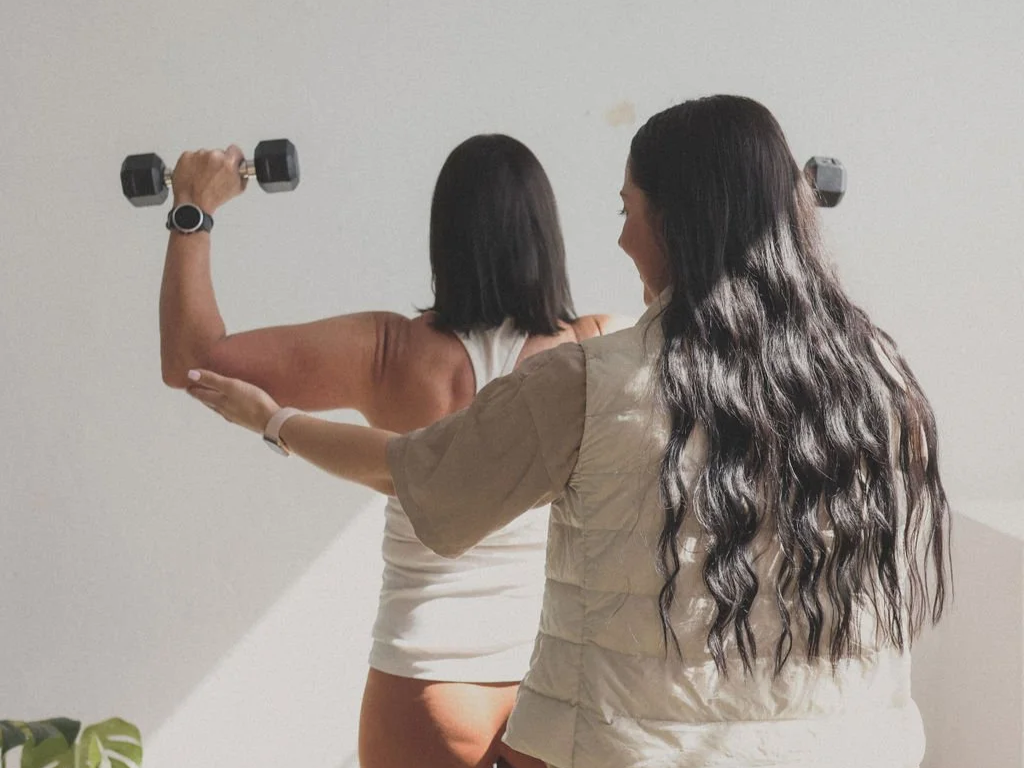
Muscle and bone loss starts earlier than you think
Here is what often surprises people. From your mid 30s, your body slowly begins to lose both muscle and bone. According to HealthDirect and the Australian Institute for Musculoskeletal Science, we lose somewhere between 3 and 8 per cent of our muscle each decade from around age 30, and this muscle loss with age picks up as we get older. The clinical name for that decline is sarcopenia.
Muscle and bone are not separate stories. They work as a team. Your muscles pull on your bones every time you move, and that pull is part of what keeps bone strong. So as muscle fades, the signal that tells your bones to hold firm fades with it. Lose one and you tend to lose the other.
For women, there is a second turning point: perimenopause and menopause. Around menopause, oestrogen falls and because oestrogen is one of the main things protecting your bones, that bone loss speeds up. Muscle and strength tend to slip faster through this stage too. Better Health Channel notes that women can lose up to 10 per cent of their bone density in the first five years after menopause, which is why bone density after menopause is so important to protect.
Some of this you can feel. The jar that is suddenly harder to open, the rail you reach for on the stairs, the chair that takes a bit more effort to rise from. Some of it you cannot feel at all, because bone loss is completely silent. That mix is exactly why this goes unnoticed and unspoken.
Osteoporosis and women: the numbers worth knowing
This is not a small or rare issue. It is common, and it is closer to home than most people realise.
The Australian Institute of Health and Welfare estimates that 23 per cent of Australian women aged 50 and over have osteoporosis, a figure that includes both diagnosed and undiagnosed cases. Research from the Geelong Osteoporosis Study found that around 2 in 5 women aged 50 will experience an osteoporotic fracture in their remaining lifetime. This is why osteoporosis prevention deserves a place in every woman's health plan, well before 50.
And this is where muscle and bone meet in real life. Weaker muscles mean less balance and more falls. Weaker bones mean a fall is far more likely to end in a break. For older adults in particular, a broken hip or spine can mean a real loss of independence and confidence. Strong muscles help keep you on your feet, and strong bones help you withstand it if you do go down. You want both working for you.
The best exercise for bone health is loading, not just moving
Here is the part that changes everything, and the part most people have never been told.
Being active is wonderful and we will always champion movement of every kind. But when it comes to building bone and muscle health, the type of exercise matters. Walking, swimming and gentle classes do a great deal of good for your heart, your mind and your day. What they do not do is place the kind of load on your muscles and skeleton that tells them to grow stronger. So no, walking alone does not build bone density.
And most of us are not loading our bodies at all. Figures from the Australian Bureau of Statistics show that only around 1 in 5 Australian adults meet the full physical activity guidelines, and close to three quarters of us do not do any muscle strengthening activity twice a week.
So what builds muscle and bone? Load. Specifically, progressive resistance training and impact, done properly. This is the same kind of strength training that builds the strength you feel day to day and the bone density you cannot. The landmark Australian LIFTMOR trial found that supervised high intensity resistance and impact training improved both bone density and physical function in postmenopausal women with low bone mass. Gentle, general exercise tends to maintain what you have. The right resistance training for bone density can build it back.
Ticking the exercise box, in other words, is not the same as protecting your strength and your bones.
The good news: you can rebuild muscle and bone at any age
If this all sounds daunting, here is the part we want you to hold onto. Muscle and bone are living tissue. They respond. They adapt to what you ask of them, at any age and any starting point, which means it is genuinely possible to improve bone density after menopause.
That does not mean throwing yourself under a heavy barbell on day one. It means the right exercises, coached and progressed, matched to your body, your history and your goals. Done well, strength training for women is one of the safest and most powerful things you can do for your future, for the muscle that keeps you capable and the bone that keeps you resilient. The danger was never in lifting. It was in doing nothing.
This is the work our exercise physiologists at Body Place in Moonee Ponds do every day. Exercise physiologists are university qualified allied health professionals who use movement to manage health and build people back stronger, safely and with a plan. Movement is medicine, and for your muscle and your bones, the right movement is powerful medicine.
Bone and muscle health FAQs
Can you rebuild bone density after menopause? Bone is living tissue and it responds to load at any age. While general exercise tends to maintain bone, progressive resistance and impact training, coached and progressed safely, can help improve bone density even after menopause. The Australian LIFTMOR trial showed exactly this in postmenopausal women with low bone mass.
What is the best exercise for bone health? Loading. Progressive resistance training and appropriate impact, done with proper technique, give your bones the signal to get stronger. Walking and swimming are wonderful for your heart and mind, but they do not load bone enough to build it.
Does walking build bone density? Walking is great for general health, but it does not place enough load on your skeleton to meaningfully build bone density. To build bone you need progressive resistance and impact.
When should women start strength training for bone health? Ideally from your 30s, because muscle and bone loss begins in your mid 30s and accelerates around menopause. That said, it is never too late. Your body responds to training at any age.
This is the conversation, in person
If reading this has made you think about your own strength and bones, or your mum's, or a friend's, then it has done its job. This is the conversation we wish every woman had a decade earlier, and we would love to have it with you properly.
That is exactly why we created The Missing Conversation, an honest lunch and learn event on bone and muscle health for women in their 30s and beyond. We sit down together over lunch and walk through the science of your muscle, your strength and your bones, separate the facts from the myths and show you what your body actually needs to stay strong for life. From an exercise and nutrition perspective from our accredited Allied Health team.
No overwhelm and no pressure. Just real answers and a clear way forward.
Saturday 18 July, Holmes Hall, Moonee Ponds. Seats are limited.
Save your seat at The Missing Conversation
Stay Evergreen.